
- Reports
- Business Case for Emotional Intelligence
- Do Emotional Intelligence Programs Work?
- Emotional Competence Framework
- Emotional Intelligence: What it is and Why it Matters
- Executives' Emotional Intelligence (mis) Perceptions
- Guidelines for Best Practice
- Guidelines for Securing Organizational Support For EI
- Johnson & Johnson Leadership Study
- Ontario Principals’ Council Leadership Study
- Technical Report on Developing Emotional Intelligence
- Measures
- Emotional Capital Report (ECR)
- Emotional Intelligence Quotient (EQ-i)
- Emotional & Social Competence Inventory 360 (ESCI)
- Emotional & Social Competence Inventory-University (ESCI-U)
- Geneva Emotional Competence Test
- Genos Emotional Intelligence Inventory (Genos EI)
- Team Emotional Intelligence (TEI)
- Mayer Salovey Caruso Emotional Intelligence Test (MSCEIT)
- Profile of Emotional Competence (PEC)
- Schutte Self-Report Inventory (SSRI)
- Six Seconds Emotional Intelligence Assessment (SEI)
- Trait Emotional Intelligence Questionnaire (TEIQue)
- Wong's Emotional Intelligence Scale
- Work Group Emotional Intelligence Profile (WEIP)
- References
- Model Programs
- Achievement Motivation Training
- Care Giver Support Program
- Competency-Based Selection
- Emotional Competence Training - Financial Advisors
- Executive Coaching
- Human Relations Training
- Interaction Management
- Interpersonal Conflict Management - Law Enforcement
- Interpersonal Effectiveness Training - Medical Students
- JOBS Program
- LeaderLAB
- Self-Management Training to Increase Job Attendance
- Stress Management Training
- Weatherhead MBA Program
- Williams' Lifeskills Program
- Article Reprints
- Members
- Events
- Bookstore
Susan David, Ph.D.
 |
Affiliation: Harvard Medical School Website: www.susandavid.com |
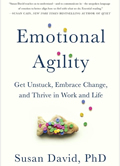
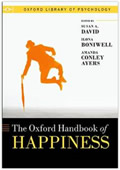
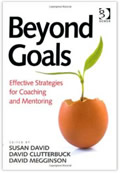
BiographySusan David, Ph.D. is an award-winning psychologist at Harvard Medical School, and co-founder of the Institute of Coaching (a Harvard Medical School / McLean affiliate). She holds a PhD in psychology (clinical) from the University of Melbourne, Australia, and a post-doctorate in emotions research from Yale. Named one of the world’s most influential management thinkers, Dr. David applies her knowledge of emotions, human motivation and wellbeing to individuals and organizations. She does this through her role as co-founder at the Institute of Coaching, extensive writing and communication work both in the academic and mainstream media, and in multiple leadership advisory roles, including as an expert contributor to the US Surgeon General’s Wellbeing at Work panel. Dr. David’s no. 1 Wall Street Journal bestselling book, Emotional Agility -- based on the concept that Harvard Business Review heralded as a “Management Idea of the Year”, describes the psychological skills that are critical to thriving in times of complexity and change. Emotional Agility has been translated into 30 languages and is winner of numerous awards, including being named an Amazon Best Leadership Book of the Year, Axiom Medalist, and the Books for a Better Life Psychology Award. Dr. David’s TED Talk on emotional agility has been seen by more than 12 million people. Dr. David also edited the definitive Oxford Handbook of Happiness (Oxford University Press) and Beyond Goals: Effective Strategies in Coaching and Mentoring (Gower). In addition to her many academic articles and chapters, Dr. David is a frequent contributor to the Harvard Business Review, New York Times, Washington Post, Wall Street Journal, and a guest on national radio and television. Dr. David’s impact has been recognized with her being named to the Thinkers50 global list of the top management thinkers and awarded the Advance Australia Award for Education. Dr. David is a sought-after keynote speaker, coach and advisor, with a worldwide client list that include the World Economic Forum, Ernst and Young Global, United Nations, Google, Microsoft, Adobe, NASA among many other multinational organizations. BooksDavid, S.A., (2016). Emotional Agility: Get Unstuck, Embrace Change and Thrive in Work and Life. Penguin Random House. David, S.A., Clutterbuck, D.A. and Megginson, D. (Eds.) (2013). Beyond Goals: Effective Strategies in Coaching and Mentoring. Surrey: Gower. David, S.A., Boniwell, I. and Conley Ayers, A. (Eds.) (2012). The Oxford Handbook of Happiness. Oxford: Oxford University Press. ArticlesDavid, S. (2013). Emotional Intelligence: Effectiveness in everyday life. Coach Link, August/September, 9-11. David, S. (2013). Emotional Intelligence: Using Mayor-Salovey in Coaching. Coach Link, October/November, 10-11. David, S. & Congleton, C. (2013). Emotional agility: How effective leaders manage their negative thoughts and feelings. Harvard Business Review, 91 (11), 125-128. David, S. & Congleton, C. (2014). Emotional agility: How effective leaders manage their negative thoughts and feelings. HBR’s OnPoint, Summer 2014, 88-92. David, S., Clutterbuck, D., and Megginson, D. (2014). Advances in Project Management Series: Insights from Beyond Goals. PMWorld Journal, 3 (4), 1-7. David, S., Clutterbuck, D., and Megginson, D. (2014). Goal orientation in coaching differs according to region, experience, and education. International Journal of Evidence Based Coaching and Mentoring, 12 (2), 134-145. David, S. & Congleton, C. (2015). Emotional agility: How effective leaders manage their negative thoughts and feelings. HBR’s 10 Must Reads on Emotional Intelligence, May 2015, 119-126. David, S. & Congleton, C. (2016). Emotional agility: How effective leaders manage their negative thoughts and feelings. HBR’s Teams at Work: Emotional Intelligence. David, S. & Congleton, C. (2016). Emotional agility: How effective leaders manage their negative thoughts and feelings. HBR’s 10 Must Reads 2017: The Definitive Management Ideas of the Year from Harvard Business Review, November 2016. ChaptersDavid, S. (2004). Integrating an emotional intelligence framework into evidence-based coaching. in Grant, A. (Ed.) Coaching Psychology. Queensland, Australia, Australian Academic Press. David, S.A. and Ebrahimi, N. (2008). Emotionally Intelligent Living. in S. Lopez (Ed.), Positive psychology: Exploring the best in people, Westport, CT, Greenwood Publishing Company. David, S.A., Boniwell, I. and Conley Ayers. (2012). Introduction (to the Oxford Handbook of Happiness). in David, S.A., Boniwell, I. and Conley Ayers, A. (Eds.) the Oxford Handbook of Happiness. Oxford: Oxford University Press. David, S.A., Boniwell, I. and Conley Ayers. (2012). Conclusion: The Future of Happiness. in David, S.A., Boniwell, I. and Conley Ayers, A. (Eds.) the Oxford Handbook of Happiness. Oxford: Oxford University Press. David, S.A., Clutterbuck, D., Megginson, D., & Congleton, C. (2013). Goals: A long-term view. in S.A. David, D. Clutterbuck & D. Megginson (Eds.), Beyond Goals: Effective Strategies in Coaching and Mentoring (1-20). Surrey: Gower. David, S.A., Megginson, D. (2013). Goals in coaching and mentoring: the current state of play. in S.A. David, D. Clutterbuck & D. Megginson (Eds.), Beyond Goals: Effective Strategies in Coaching and Mentoring (21-35). Surrey: Gower. David, S.A., Megginson, D., & Congleton, C. (2013). Researching goals in coaching. in S.A. David, D. Clutterbuck & D. Megginson (Eds.), Beyond Goals: Effective Strategies in Coaching and Mentoring (37-54). Surrey: Gower. David, S.A., Clutterbuck, D. & Megginson, D. (2013). The way forward: Perspectives from the editors. in S.A. David, D. Clutterbuck & D. Megginson (Eds.), Beyond Goals: Effective Strategies in Coaching and Mentoring (327-338). Surrey: Gower. Kegan, R., Congleton, C. & David, S.A. (2013). The goals behind the goals: Pursuing adult development in the coaching enterprise. in S.A. David, D. Clutterbuck & D. Megginson (Eds.), Beyond Goals: Effective Strategies in Coaching and Mentoring (229-243). Surrey: Gower. Kram, K.E., David, S.A. & Congleton, C. (2013.) Goals in mentoring relationships and developmental networks. in S.A. David, D. Clutterbuck & D. Megginson (Eds.), Beyond Goals: Effective Strategies in Coaching and Mentoring (261-274). Surrey: Gower. Whitmore, J., Kauffman, C., & David, S.A. (2013). GROW grows up: From winning the game to pursuing transpersonal goals. in S.A. David, D. Clutterbuck & D. Megginson (Eds.), Beyond Goals: Effective Strategies in Coaching and Mentoring (245-260). Surrey: Gower. David, S.A., Congleton, C., (2015) Emotional Agility: How Effective Leaders Manage Their Thoughts and Feelings. On Emotional Intelligence HBR’s 10 Must Reads Harvard Business Review 119-126. David, S.A., Congleton, C. (2017) Emotional Agility: How Effective Leaders Manage Their Thoughts and Feelings. Mindfulness (HBR Emotional Intelligence Series), 55-70. David, S.A., (2017). HBR Guide to Emotional Intelligence: Build trust and influence. Strengthen relationships. Lead with resilience. A Vocabulary for Your Emotions: Get Precise. (HBR Guide Series), 35-41. David, S.A., (2017). HBR Guide to Emotional Intelligence: Build trust and influence. Strengthen relationships. Lead with resilience. Make Your Emotions Work for You: Use Them As Data. (HBR Guide Series), 53-56. David, S.A., (2017) HBR Guide to Emotional Intelligence: Build trust and influence. Strengthen relationships. Lead with resilience. Recovering from An Emotional Outburst: You can’t just apologize and move on. (HBR Guide Series), 67-70. |
|

BOOKS
 |
 |
 |
