
- Reports
- Business Case for Emotional Intelligence
- Do Emotional Intelligence Programs Work?
- Emotional Competence Framework
- Emotional Intelligence: What it is and Why it Matters
- Executives' Emotional Intelligence (mis) Perceptions
- Guidelines for Best Practice
- Guidelines for Securing Organizational Support For EI
- Johnson & Johnson Leadership Study
- Ontario Principals’ Council Leadership Study
- Technical Report on Developing Emotional Intelligence
- Measures
- Emotional Capital Report (ECR)
- Emotional Intelligence Quotient (EQ-i)
- Emotional & Social Competence Inventory 360 (ESCI)
- Emotional & Social Competence Inventory-University (ESCI-U)
- Geneva Emotional Competence Test
- Genos Emotional Intelligence Inventory (Genos EI)
- Team Emotional Intelligence (TEI)
- Mayer Salovey Caruso Emotional Intelligence Test (MSCEIT)
- Profile of Emotional Competence (PEC)
- Schutte Self-Report Inventory (SSRI)
- Six Seconds Emotional Intelligence Assessment (SEI)
- Trait Emotional Intelligence Questionnaire (TEIQue)
- Wong's Emotional Intelligence Scale
- Work Group Emotional Intelligence Profile (WEIP)
- References
- Model Programs
- Achievement Motivation Training
- Care Giver Support Program
- Competency-Based Selection
- Emotional Competence Training - Financial Advisors
- Executive Coaching
- Human Relations Training
- Interaction Management
- Interpersonal Conflict Management - Law Enforcement
- Interpersonal Effectiveness Training - Medical Students
- JOBS Program
- LeaderLAB
- Self-Management Training to Increase Job Attendance
- Stress Management Training
- Weatherhead MBA Program
- Williams' Lifeskills Program
- Article Reprints
- Members
- Events
- Bookstore
Reuven Bar-On, Ph.D.
 |
Affiliation: University of Texas Medical Branch |
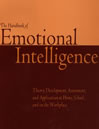
BiographyReuven Bar-On was born in California in 1944 and currently resides in Texas since 2002. In addition to the United States, he has lived in Canada, Italy and South Africa as well as in Israel where he has resided most of his life. He holds American and Israeli citizenship and is fully bilingual in both English and Hebrew. He is married, the father of three and the grandfather of six. He is a retired Major from the IDF and has worked as a clinical and organizational psychologist for both government and private organizations for four decades. Upon completing his BA and MA in the United States, he continued to study psychology in South Africa at Rhodes University and received his PhD in 1988. While completing his doctoral studies in South Africa, Dr. Bar-On received an honorary “Igqira” (witch-doctor) from the Xhosa People for clinical work he did which demonstrated that the cross-cultural gap between western psychology and local traditional practices could be bridged. He received membership in the American Psychological Association and in the Israeli Psychological Association. Dr. Bar-On is also a licensed clinical psychologist and clinical supervisor in Israel; and from 1998 until 2000, he lectured on psychopathology in the Department of Family Medicine at the Tel Aviv University School of Medicine. He received an adjunct faculty appointment in the medical school at the University of Texas Medical Branch in 2003 and an adjunct professorship in the Faculty of Education at the University of Pretoria in 2008. For his contribution to the field of emotional intelligence, Dr. Bar-On was accepted as a Fellow in the Royal Academy of the Arts in the UK. He was accepted into the Consortium for Research on Emotional Intelligence in Organizations as the first non-founding member. Dr Bar-On is affiliated with the Collaborative for Academic, Social and Emotional Learning in Chicago and with the National School Climate Center in New York, where he is a senior advisor on emotional and social intelligence in both organizations. Additionally, he is a senior advisor on emotional intelligence to the Best Practice Institute in the US. He also holds membership in the Association for Coaching (UK), Association of Business Psychologists (UK), International Coach Federation, Asia Pacific Alliance of Coaches, and in the Global Mastermind Group which is a multinational think-tank for advancing leadership and team development. In addition to his work in the field of clinical psychology from 1972, Dr. Bar-On has been involved in conceptualizing, researching and applying emotional intelligence since 1980 and is acknowledged as one of the leading theorists, researchers and practitioners in this field. The “Bar-On model of emotional intelligence” is described as one of three leading approaches to this construct in the Encyclopedia of Applied Psychology. He coined the term “EQ” (“Emotional Quotient”) in 1985 to describe his approach to assessing emotional and social competence. He created the Bar-On Emotional Quotient Inventory™ (the EQ-i™), which is the first test of emotional intelligence to be published by a psychological test publisher and peer-reviewed in the Buros Mental Measurement Yearbook. The EQ-i™ has been translated into more than 30 languages and passed the one million mark worldwide, within five years after it was published, making it the most popularly-used measure of emotional intelligence. Together with Dr. James Parker, he published the Bar-On EQ-i:YV™ which is the first commercially available test designed to assess emotionally and socially intelligent behavior in children and adolescents; in addition to being favorably reviewed in the Buros Mental Measurement Yearbook, the EQ-i:YV™ has been selected by psychometricians at the University of Oxford as the emotional intelligence test of choice for children and recommended for use in schools in the UK. Together with Dr. Richard Handley, he published the Bar-On EQ-360™ and the Bar-On EQ-interview™. Together with Dr. Parker, he also co-edited the Handbook of Emotional Intelligence, in 2000, which is one of the first textbooks on this topic to be published. Together with Drs. Kobus Maree and Maurice Elias, he co-edited an additional book in this area in 2007 titled Educating People to Be Emotionally Intelligent. Based on a training manual he wrote with Dr. Handley, Optimizing People, he co-developed the first web-based training program designed to improve emotional intelligence competencies and skills. Dr. Bar-On has been involved in numerous projects related to the study and application of emotional intelligence for nearly three decades. An example includes a three-year study in the Israeli Defense Forces that empirically demonstrated the impact of emotional intelligence on performance and its ability to predict command leadership. He has also analyzed the findings of an extensive research project conducted by Dr. Marian Ruderman at the Center for Creative Leadership in the US, which confirms the ability of emotional and social intelligence to predict successful corporate leaders. He has also been involved in a 25-year longitudinal study of 23,000 youth to determine the inter-relationship between emotional and social intelligence and biomedical, cognitive, developmental and educational factors; this study, which is being conducted by Human Resources and Skills Development Canada, represents the first longitudinal study of emotional intelligence and is expected to shed light on how this construct develops, what affects it and what is affected by it. He was also invited to join researchers at the University of Pretoria in collaboration with a research team in the Pediatric Department at the Yale School of Medicine, who investigated the impact of emotional and social intelligence on resiliency among children of AIDS patients in Africa. Additionally, he has been involved in research projects examining the neurological substrate of emotional and social intelligence as well as its impact on physical and psychological disorders. Together with colleagues in the College of Medicine at the University of Iowa, he published the first peer-reviewed paper on the neurological basis of emotional and social intelligence. Dr. Bar-On founded Bar-On Consulting and has been doing research-based consultation for public and private organizations worldwide on an ongoing basis. He developed what he refers to as Star Performer Profiling™ which involves creating statistical models that predict high performance and are used in hiring, training and promoting effective and satisfied employees that enhance client satisfaction and overall organizational effectiveness. This process has helped organizations save or make hundreds of millions of dollars worldwide since 1996. Dr. Bar-On’s work has been described in encyclopedias, books and professional journals as well as in numerous newspaper, radio and television interviews around the world. He has over 40 publications in the area of emotional and social intelligence alone, and he has delivered more than 25 presentations at professional conferences held in over 10 countries. His work is cited in more than 2,800 peer-reviewed articles as well as theses and dissertations. Articles Book Chapters Books, handbooks, manuals and dissertation Psychometric instruments |
|

Books
 |
 |
